________________
Wednesday, May 23, 2018
Saturday, December 28, 2013
Iowa Radio Station Grants Mom's Christmas Wishes Two Years after Death
The wife and mother of four wanted three requests fulfilled when her husband found a life partner.
Tragic yet amazing...
Listen to radio broadcast here...
Monday, October 21, 2013
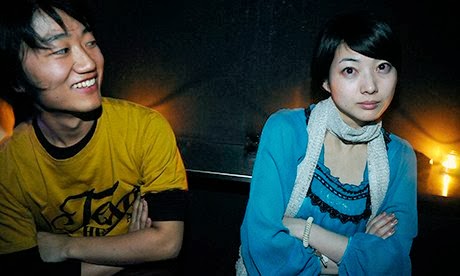
Why have young people in Japan stopped having sex?
Is Japan providing a glimpse of all our futures? Many of the shifts there are occurring in other advanced nations, too. Across urban Asia, Europe and America, people are marrying later or not at all, birth rates are falling, single-occupant households are on the rise and, in countries where economic recession is worst, young people are living at home....
Japan's 20-somethings are the age group to watch. Most are still too young to have concrete future plans, but projections for them are already laid out. According to the government's population institute, women in their early 20s today have a one-in-four chance of never marrying. Their chances of remaining childless are even higher: almost 40%.
Tuesday, July 30, 2013
Monday, August 6, 2012
Raising Successful Children
Excerpt:
So if children are able to live with mistakes and even failing, why does it drive us crazy? So many parents have said to me, “I can’t stand to see my child unhappy.” If you can’t stand to see your child unhappy, you are in the wrong business. The small challenges that start in infancy (the first whimper that doesn’t bring you running) present the opportunity for “successful failures,” that is, failures your child can live with and grow from. To rush in too quickly, to shield them, to deprive them of those challenges is to deprive them of the tools they will need to handle the inevitable, difficult, challenging and sometimes devastating demands of life.
Read more here...
http://www.nytimes.com/2012/08/05/opinion/sunday/raising-successful-children.html?pagewanted=1&_r=1&smid=FB-nytimes
Sunday, August 5, 2012
China's Leftover Women
A Chinese-American author is trying to encourage Chinese women that it's okay to pursue a career while postponing marriage. That can be a risky strategy in China - where single women 25 and over can find themselves branded as "leftover women".
Watch CBS Video Report Here...
http://www.cbsnews.com/8301-505263_162-57462607/plight-of-young-leftover-women-in-china/
Sunday, January 8, 2012
Best of Kultura 2011-The Articles
2011 Articles of Note
1. The Little Trick
By Anton Chekov
A beautiful short story by the celebrated Russian writer.
http://ajarnmike.blogspot.com/2011/03/little-trick.html
2. A Grief Like No Other
By Eric Schlosser
Excerpt:
Patty also found consolation at her son's grave. During the first year after the murder she stopped by the cemetery two or three times a day. Usually she'd visit the grave for fifteen minutes or so. At other times, including his birthday, she would sit there all day. His birthday was in February, when the weather was harsh and cold. One thing she could not bear was the thought of snow covering Tim's body. Whenever it snowed, she had to visit the cemetery and clear off his grave. One day after a snowstorm she arrived and found that someone who knew how she felt had already removed the snow from Tim's grave."
http://ajarnmike.blogspot.com/2011/07/grief-like-no-other.html
3. Why We Travel
by Paul Theroux
“Don’t go there,” the know-it-all, stay-at-home finger wagger says of many a distant place. I have heard it my whole traveling life, and in almost every case it was bad advice. In my experience these maligned countries are often the most fulfilling. I am not saying they are fun. For undiluted jollification you bake in the sun at Waikiki with a mai tai in your fist, or eat lotuses on the Côte d’Azur. As for the recognition of hard travel as rewarding, the feeling is mainly retrospective, since it is only in looking back that we see how we have been enriched. At the time, of course, the experience of being a bystander to sudden political or social change can be alarming.
http://ajarnmike.blogspot.com/2011/04/argument-for-travel-during-turbulent.html
4. Living in the Moment Really Does Make You Happier
By Ian Sample
They found that people were happiest when having sex, exercising or in conversation, and least happy when working, resting or using a home computer. And although subjects' minds were wandering nearly half of the time, this consistently made them less happy.
The team conclude that reminiscing, thinking ahead or daydreaming tends to make people more miserable, even when they are thinking about something pleasant.
http://ajarnmike.blogspot.com/2011/08/living-in-moment-really-does-make.html
5. ...the last sentence
The last words of some pretty cool people.
http://ajarnmike.blogspot.com/2011/08/famous-last-words.html
6. Dummy Land
Writer Avi Steinberg visits a ventriloquist convention...great article.
http://ajarnmike.blogspot.com/2011/07/dummy-land.html
7. The Oatmeal
Hilarious comics with a little social commentary added... By Mathew Inmann
http://ajarnmike.blogspot.com/2011/07/oatmeal.html
Monday, June 21, 2010
Aung San Suu Kyi: The Unseen Photos
A Tragic Love Story...Aung San Suu Kyi was born on 19 June 1945 in Yangon.[10] Her name is derived from three relatives; "Aung San" from her father, "Kyi" from her mother and "Suu" from her grandmother.[11] Her father, Aung San, founded the modern Burmese army and negotiated Burma's independence from the United Kingdom in 1947; he was assassinated by his rivals in the same year. She grew up with her mother, Khin Kyi, and two brothers, Aung San Lin and Aung San Oo in Rangoon. Her favourite brother Aung San Lin died at age eight, when he drowned in an ornamental lake in the grounds of the house.[11] Her elder brother emigrated to San Diego, California, becoming a United States citizen.[11] After Lin's death, the family moved to a house by Inya Lake where she met people of very different backgrounds, political views and religions.[12] Suu Kyi was educated in Methodist English High School (Now known as Basic Education High School No.1 Dagon[13]) for much of her childhood in Burma where she was noted as having a talent for learning languages.[14] She is a Theravada Buddhist.
Suu Kyi's mother, Khin Kyi, gained prominence as a political figure in the newly formed Burmese government. She was appointed Burmese ambassador to India and Nepal in 1960, and Aung San Suu Kyi followed her there, graduating from Lady Shri Ram College with a degree in politics in New Delhi in 1964.[15][16] Suu Kyi continued her education at St Hugh's College, Oxford, obtaining a B.A. degree in Philosophy, Politics, and Economics in 1969. After graduating, she lived in New York City with a family friend and worked at the United Nations for three years, primarily on budget matters, writing daily to her future husband Dr. Michael Aris.[17] In 1972, Aung San Suu Kyi married Aris, a scholar of Tibetan culture, living abroad in Bhutan.[15] The following year she gave birth to their first son, Alexander Aris, in London; their second son, Kim, was born in 1977. Following this, she earned a Ph.D. at the School of Oriental and African Studies, University of London in 1985. She was elected an Honorary Fellow in 1990.[15] For two years she was a Fellow at the Indian Institute of Advanced Studies (IIAS) in Shimla, India. She also worked for the government of the Union of Burma.
In 1988 Suu Kyi returned to Burma at first to tend for her ailing mother but later to lead the pro-democracy movement. Aris’s visit in Christmas 1995 turned out to be the last time that he and Suu Kyi met, as Suu Kyi remained in Burma and the Burmese dictatorship denied him any further entry visas.[15] Aris was diagnosed with prostate cancer in 1997 which was later found to be terminal. Despite appeals from prominent figures and organizations, including the United States, UN Secretary General Kofi Annan and Pope John Paul II, the Burmese government would not grant Aris a visa, saying that they did not have the facilities to care for him, and instead urged Aung San Suu Kyi to leave the country to visit him. She was at that time temporarily free from house arrest but was unwilling to depart, fearing that she would be refused re-entry if she left, as she did not trust the junta's assurance that she could return.[18]
Aris died on his 53rd birthday on 27 March 1999. Since 1989, when his wife was first placed under house arrest, he had seen her only five times, the last of which was for Christmas in 1995. She also remains separated from her children, who live in the United Kingdom.[19]
On 2 May 2008, after Cyclone Nargis hit Burma, Suu Kyi lost her roof and was living in virtual darkness after losing electricity in her dilapidated lakeside residence. She used candles at night as she was not provided any generator set.[20] Plans to renovate and repair the house were announced in August 2009.
See More photos here...
http://www.guardian.co.uk/world/gallery/2010/jun/17/aung-san-suu-kyi-photographs?picture=363848997