________________

For the Global Thinker

Wednesday, May 23, 2012

Hatred in the Hills

A Vicious Beating, A Poor Town, And A Thorny Debate Over Hate-Crime Laws
HARLAN COUNTY, Ky. -- In the middle of an April night last year, a young gay man named Kevin Pennington crawled out of the woods in the remote hills of southeastern Kentucky, looking for help. Bruises and cuts covered his face and body and he limped down the road, dragging his ankle along the asphalt, until he reached a pair of empty cabins in a clearing -- a ranger's station -- and smashed out a window in one and climbed inside.
Pennington then called 911, setting in motion a series of events that will culminate next month in a historic trial: For the first time, the federal government will prosecute someone for a hate crime aimed at a gay person...

READ MORE HERE...
http://www.huffingtonpost.com/2012/05/23/hate-crime-harlan-county_n_1534421.html

First a gay Archie comics character and now this...

DC Comics' Gay Superhero In The Works: Publisher Dan DiDio Says that one of the DC Superheroes will be coming out of the closet...

Details of the character and his specific story arc are relatively scarce thus far, but as Bleeding Cool is reporting, DC Comics co-publisher Dan DiDio told attendees at the Kapow Comic Convention in London that the superhero -- an established player in one of the series, and was originally introduced as straight -- will become "one of our most prominent gay characters."
DC Comics has produced some of the comic book world's most iconic superheroes, including Superman, Wonder Woman and others. Senior Vice President Bob Wayne compared his company's policy on gay characters to that of President Obama in that it "has evolved."

READ MORE HERE...
http://www.huffingtonpost.com/2012/05/21/dc-comics-gay-superhero-i_n_1533105.html

Ancients Behaving Badly-Cleopatra

Friday, May 18, 2012

Brazil's Secret Slave Societies

Damm...the Continent of the Americas has an amazing history...and it's not the one you learned in history class...exceptional article...

Imagine flying, impossibly, over the Earth in the 17th century—during the time described in American history books as the colonial period, when Europeans swarmed into the New World to dominate an almost empty wilderness. Instead, you would see tens of millions of native people already living in the Americas, joined by an extraordinary flow not of European colonists but of African slaves. Up until the early 19th century, almost four times as many Africans as Europeans came to the Americas. Looking down from above, you wouldn’t know that the tiny numbers of Europeans were supposed to be the stars of the story. Rather, your attention would focus on the two majority populations: Africans and Indians.

You’d have a lot to watch. By the tens of thousands, African slaves escaped the harsh conditions of the European plantations and mining operations and headed for the interior, into lands controlled by Indians. Up and down the Americas, ex-slaves and indigenous peoples fashioned hybrid settlements known as maroon communities, after the Spanish cimarrón, or runaway.
Largely conducted out of sight of Europeans, the complex interplay between black and red is a hidden drama that historians and archaeologists have only recently begun to unravel. Nowhere is the presence of this lost chapter more in evidence than... 

READ MORE HERE...
http://ngm.nationalgeographic.com/2012/04/maroon-people/mann-hecht-text

Tuesday, May 15, 2012

Aokigahara Suicide Forest


Definitely one of the most original documentaries I've seen...

The Aokigahara Forest is the most popular site for suicides in Japan. After the novel Kuroi Jukai was published, in which a young lover commits suicide in the forest, people started taking their own lives there at a rate of 50 to 100 deaths a year. 

The site holds so many bodies that the Yakuza pays homeless people to sneak into the forest and rob the corpses. The authorities sweep for bodies only on an annual basis, as the forest sits at the base of Mt. Fuji and is too dense to patrol more frequently. 

Watch full documentary here...


Friday, May 11, 2012

Shanghaied


Why you shouldn't believe everything you read about China. Hint: not even the journalists really know what’s going on.

BY GEOFF DYER | MAY 10, 2012


When I reported in China from 2005 to 2011 it was remarkable how little the foreign correspondent community -- myself included -- really knew about what was going on in the top ranks of the Communist Party.  

Ministers and agency heads occasionally talk to the foreign press; senior leaders almost never do. Of the nine members of the Politburo Standing Committee, the governing body that runs China, only Premier Wen Jiabao answers questions with any regularity at press conferences (he holds one every year); he's also pretty much the only figure who has given interviews with foreign media. But when the Financial Times spoke with him in London in 2009, there were 15 other ministers and senior officials in the room, sitting in rows of chairs facing Wen. It was never clear if they were there to support or to monitor him.

Read more here...
http://www.foreignpolicy.com/articles/2012/05/10/shanghaied?page=full 

Thursday, May 10, 2012

Best Military Photographs of the Year

An AC-130U Gunship from the 4th Special Operations Squadron flies a local training mission on January 27, 2011 at Hurlburt Field, Florida.

Sgt. 1st Class John Berentis, from Yuma, Ariz., and Staff Sgt. Laura Dickmeyer, from Abilene, Texas - members of the U.S. Army Parachute Team - assess wind conditions aloft prior to their pre-game jump into FedEx field for the Army vs. Navy game.


Above, U.S. Marine Corps Lance Cpl. Reagan Lodge, conducts water running exercises during a physical training session in Ramer Hall, on Marine Corps Base in Quantico, Virginia on Sept. 14.

First Place, News category
"A Father's Salute"

The father of Lance Cpl. Christopher Mies salutes the casket of his son at Buckley Air Force Base.

SEE MORE HERE...

Waste Land


Few documentaries showcase the human spirit as well as Waste Land.  Filmed over nearly three years, WASTE LAND follows renowned artist Vik Muniz as he journeys to his native Brazil and the world's largest garbage dump, Jardim Gramacho, located on the outskirts of Rio de Janeiro.  There he will help transform the lives of seven garbage pickers as he sells their portraits at Sotherby's in London and gives the pickers 1005 of the profit.  Enjoy, it is truly captivating...

Follow this link and there are a variety of links to watch the full documentary online....
( I used...DediTv (1) )....
http://www.alluc.org/movies/watch-waste-land-2010-online/224150.html

Thursday, May 3, 2012

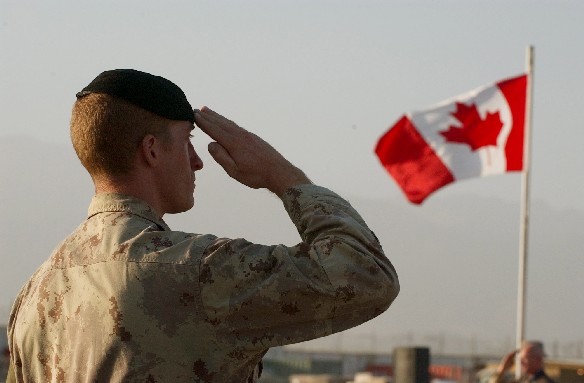
Was it Worth it? Canadians reflect on the War in Afghanistan


Reflections on what we were fighting for in Afghanistan from a handful of Canadians who actually waged the war or led the battles over issues of principle and peace...


WAS THE WAR WORTH THE COST? – "The mission was worth the cost because it toppled a repressive regime, removed a major terrorist threat, helped Afghans begin rebuilding their lives and institutions after decades of war. Canada played a leadership role in education, rural development, as well as in a major, UN-mandated NATO mission. Canada and the world are safer for it."

Chris Alexander – former Canadian ambassador to Kabul, then the UN’s deputy special representative to Afghanistan until 2009 and now a Conservative MP.

WAS THE WAR WORTH THE COST? - "Certainly not to the people of Afghanistan or Canada. After 20 years war and five years of the Taliban, Afghans got another decade of violence and corruption. Canadians got skyrocketing military budgets and underfunded social programs. The winners were defence contractors and the power elite willing to trade the leftovers of Canadian independence for more business in the United States."

Raymond Legault – prominent anti-war activist, community college teacher in Montreal and spokesman for Échec à la guerre

WAS THE WAR WORTH THE COST? – "Despite the heroic efforts of Canadian Forces men and women, and the great respect they deservedly won for our nation, our mission in Kandahar was definitely not worth the cost of over 150 Canadian lives lost and countless others destroyed by the fallout of war, let alone the tens of thousands of Afghan people and other coalition forces who have also been killed." 


Pat Stogran – retired colonel, who led the first Canadian combat contingent in Afghanistan in 2002 and later served as Canada's first Veterans Ombudsman where he was a tireless champion of better treatment for wounded soldiers

READ MORE HERE...


http://www.theglobeandmail.com/news/world/was-it-worth-it-canadians-reflect-on-the-war-in-afghanistan/article2326272/

The Ktunaxa: Can the Internet Save a Language?


For these last Canadian indigenous people, the internet could be key to saving a language related to no other on earth.
Can the internet save a language? For the Ktunaxa nation, an indigenous people inhabiting parts of north-western America, the answer may just be 'yes'.

The Ktunaxa language is related to no other on earth and only a handful of people speak it fluently. Most of them are members of the oldest generation, something that has spurred a race against time for a community that must record and preserve as much of the language spoken today as possible. In a few years, it might already be too late.

The challenge is not only to record endless hours of material but how to make it available to those wishing to learn the language. Here is where the internet comes in to play. Dedicated young community members, such as Marisa Philips, are working hard to publish recordings, interactive games for children and written language material online.

"We're just going to be losing a lot of who we are as the Ktunaxa nation, the Ktunaxa people, once those elders have passed on," Philips says. "Since the younger generation is so well adapted to using technology, it only makes sense to me."
Full article and video here...
http://www.aljazeera.com/programmes/livingthelanguage/2012/04/20124161467967300.html 

Also Check out these other short docs on Living the Language:

Guatemala:  The Maya
Many Mayans complain of feeling like foreigners in their own land - a sentiment compounded by the dominance of Spanish.

Australia:  The Aboriginal People
Australia, which was once home to 200 languages, now suffers from the highest rate of language extinction in the world. 

http://www.aljazeera.com/programmes/livingthelanguage/2012/04/201241612291819363.html