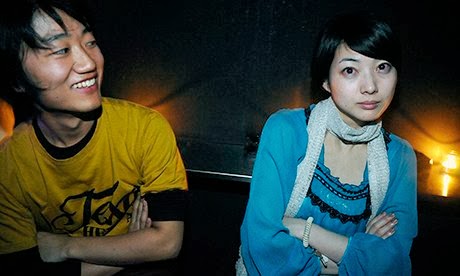
Inside the world of introverts....Three great articles that are definitely worth reading....
Caring for Your Introvert
Excerpt:
Introverts are not necessarily shy. Shy people are anxious or
frightened or self-excoriating in social settings; introverts generally
are not. Introverts are also not misanthropic, though some of us do go
along with Sartre as far as to say "Hell is other people at breakfast."
Rather, introverts are people who find other people tiring.
Extroverts are energized by people, and wilt or fade when alone.
They often seem bored by themselves, in both senses of the expression.
Leave an extrovert alone for two minutes and he will reach for his cell
phone. In contrast, after an hour or two of being socially "on," we
introverts need to turn off and recharge. My own formula is roughly two
hours alone for every hour of socializing. This isn't antisocial. It
isn't a sign of depression. It does not call for medication. For
introverts, to be alone with our thoughts is as restorative as sleeping,
as nourishing as eating. Our motto: "I'm okay, you're okay—in small
doses."
How many people are introverts? I performed exhaustive
research on this question, in the form of a quick Google search. The
answer: About 25 percent. Or: Just under half. Or—my favorite—"a
minority in the regular population but a majority in the gifted
population."
Are introverts misunderstood? Wildly. That, it appears, is
our lot in life. "It is very difficult for an extrovert to understand an
introvert," write the education experts Jill D. Burruss and Lisa
Kaenzig. (They are also the source of the quotation in the previous
paragraph.) Extroverts are easy for introverts to understand, because
extroverts spend so much of their time working out who they are in
voluble, and frequently inescapable, interaction with other people. They
are as inscrutable as puppy dogs. But the street does not run both
ways. Extroverts have little or no grasp of introversion. They assume
that company, especially their own, is always welcome. They cannot
imagine why someone would need to be alone; indeed, they often take
umbrage at the suggestion. As often as I have tried to explain the
matter to extroverts, I have never sensed that any of them really
understood. They listen for a moment and then go back to barking and
yipping.
Are introverts oppressed? I would have to say so. For one
thing, extroverts are overrepresented in politics, a profession in which
only the garrulous are really comfortable. Look at George W. Bush. Look
at Bill Clinton. They seem to come fully to life only around other
people. To think of the few introverts who did rise to the top in
politics—Calvin Coolidge, Richard Nixon—is merely to drive home the
point. With the possible exception of Ronald Reagan, whose fabled
aloofness and privateness were probably signs of a deep introverted
streak (many actors, I've read, are introverts, and many introverts,
when socializing, feel like actors), introverts are not considered
"naturals" in politics.
Extroverts therefore dominate public life. This is a pity. If we
introverts ran the world, it would no doubt be a calmer, saner, more
peaceful sort of place.
READ FULL ARTICLE HERE...
Also check out this article...
Confessions of an Introverted Traveler
Excerpt:
We introverts have a different style of travel, and I’m tired of hiding it.
Oh, I’m always happy enough when interesting people stumble into my
path. It’s a lagniappe, and I’m capable of connecting with people when
the opportunity arises. And when the chemistry is right, I enjoy it.
But I don’t seek people out, I am terrible at striking up
conversations with strangers and I am happy exploring a strange city
alone. I don’t seek out political discourse with opinionated cab drivers
or boozy bonding with locals over beers into the wee hours. By the time
the hours get wee, I’m usually in bed in my hotel room, appreciating
local color TV. (So sue me, but I contend that television is a valid
reflection of a society.)
This is not something I confess easily. I have long been shamed out
of owning my introversion by the extroverts who dominate American
culture. Extroversion has long been considered healthier than
introversion, and introverts often try to push against our natural
tendencies in order to fit in, to seem “normal” so people will stop
scolding us. Extroverts are unintentional bullies, demanding that
everyone join their party or be considered queer, sad or stunted.
Introversion and extroversion are inborn traits, and the difference
between them is not that one is gregarious and at ease in the world and
the other shy and awkward. Rather, extroverts are outwardly motivated
and gain energy from interaction with the outside world while introverts
are more inwardly directed and drained by interaction with others.
Introverts’ thinking tends to be deep and slow, we require copious time
alone, we prefer probing conversation to shallow chitchat, and our
social lives are geared more towards intimate one-on-one interactions
than “more the merrier” free-for-alls.
READ FULL ARTICLE HERE...
The Secret Power of Introverts
If you had to guess, what would you say investor Warren Buffet
and civil rights activist Rosa Parks had in common? How about Charles
Darwin, Al Gore, J.K. Rowling, Albert Einstein, Mahatma Gandhi and Google’s Larry Page? They are icons. They are leaders. And they are introverts.
Despite the corporate world’s insistence on brazen confidence–Speak
up! Promote yourself! Network!—one third to half of Americans are
believed to be introverts, according to Susan Cain, author of just
released Quiet: The Power of Introverts in a World That Can’t Stop Talking.
She contends that personality shapes our lives as profoundly as gender
and race, and where you fall on the introvert-extrovert spectrum is the
single most important aspect of your personality.
Introverts may make up nearly half the population...
READ FULL ARTICLE HERE...
http://www.forbes.com/sites/jennagoudreau/2012/01/26/the-secret-power-of-introverts/